
TL;DR
Bloating increases internal abdominal pressure, which disrupts neurological signals that control spinal alignment and postural stability. This creates a cascade effect where the nervous system responds to internal pressure by altering muscle tone and coordination throughout the spine. Acupuncture supports nervous system balance and muscle relaxation, offering a complementary approach to address both bloating-related discomfort and the postural compensation patterns that develop.
───────────────────────────────────────────────────
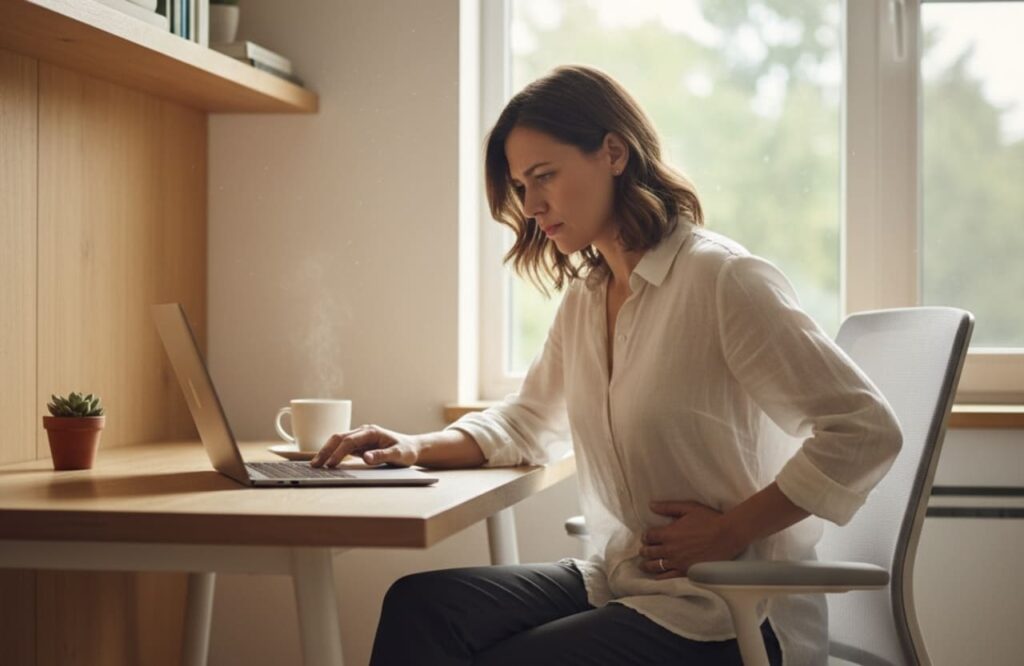
You know the feeling: after a meal or during stressful periods, your abdomen feels distended and uncomfortable. What you might not realize is how this bloating creates a ripple effect throughout your entire body, particularly affecting your posture and spinal alignment. When internal abdominal pressure increases, your nervous system responds by altering the way muscles coordinate and stabilize your spine.
This neurological connection between bloating and postural discomfort affects thousands of people daily, creating patterns of tension and compensation that extend far beyond the digestive system. Understanding this relationship opens the door to more comprehensive treatment approaches that address both the internal pressure and the physical adaptations your body makes in response.
We’ll explore how acupuncture supports nervous system regulation and helps restore balance between internal pressure and postural stability, offering hope for those experiencing this complex interaction of symptoms.
How Does Bloating Create Neurological Disruption in Postural Control?
Bloating fundamentally alters the internal pressure dynamics of your abdominal cavity. When your digestive system becomes distended, the increased volume creates upward pressure against your diaphragm and outward pressure against your abdominal wall. This pressure change doesn’t exist in isolation; it directly affects the neurological networks responsible for maintaining spinal stability.
Your nervous system continuously monitors internal pressure through specialized receptors called mechanoreceptors. These sensors detect changes in tissue tension and pressure, sending signals to your brain about the current state of your internal environment. When bloating increases abdominal pressure, these receptors trigger protective responses throughout your postural control system.
The autonomic nervous system responds to this pressure by altering muscle tone patterns along your spine. Your deep core stabilizers, including the diaphragm, pelvic floor, and transverse abdominis, work together to maintain optimal internal pressure for spinal support. When bloating disrupts this delicate balance, your nervous system compensates by increasing tension in superficial muscle groups, creating the stiffness and discomfort you feel in your back and neck.
Research suggests that acupuncture functions as a global fasciotomy, potentially helping to release tension patterns that develop when your nervous system adapts to internal pressure changes. This mechanism offers insight into why acupuncture treatments address both internal discomfort and external postural symptoms simultaneously.
The Cascade Effect on Spinal Mechanics
When your nervous system detects increased internal pressure, it initiates a protective sequence that affects your entire kinetic chain. Your brain interprets abdominal distension as a potential threat to spinal stability, triggering compensatory muscle activation patterns that extend from your pelvis to your neck.
This neurological response creates predictable changes in your posture. Your ribcage often elevates slightly to accommodate the increased abdominal volume, shifting your center of gravity forward. Your lumbar spine compensates by increasing its natural curve, while your thoracic spine rounds forward to counterbalance. These adaptations happen automatically, below your conscious awareness, as your nervous system prioritizes perceived stability over optimal alignment.
What Physical Changes Occur When Internal Pressure Affects Spinal Alignment?
The mechanical relationship between internal abdominal pressure and spinal alignment operates through your body’s fascial network and muscle coordination systems. When bloating increases internal volume, the resulting pressure creates tension patterns that propagate through interconnected tissue layers, affecting muscle function throughout your torso.
Your diaphragm, which serves as both a breathing muscle and a core stabilizer, becomes restricted when abdominal pressure increases. This restriction limits the diaphragm’s ability to move freely, reducing its contribution to spinal stability. Your nervous system compensates by recruiting secondary muscles, including your neck and shoulder muscles, to maintain postural control.
The thoracolumbar fascia, a dense connective tissue network that surrounds your lower back muscles, responds to changes in internal pressure by altering its tension patterns. This fascial adaptation affects how forces transfer through your spine during movement, creating areas of increased stiffness and decreased mobility that contribute to postural discomfort.
Muscle Coordination Disruption
Internal pressure changes disrupt the timing and intensity of muscle activation patterns that normally maintain efficient posture. Your deep core muscles, designed to provide continuous low-level support, become overactive or inhibited depending on the pressure distribution within your abdominal cavity.
This disruption creates a domino effect throughout your postural system. When your primary stabilizers function inefficiently, your movement system recruits global muscles like your erector spinae and upper trapezius to provide stability. These muscles, designed for movement rather than sustained support, become overworked and develop trigger points and tension patterns that contribute to ongoing discomfort.
How Does Acupuncture Support Nervous System Balance for Postural Recovery?
Acupuncture influences nervous system regulation through multiple pathways that directly address the neurological disruption caused by internal pressure changes. Clinical research demonstrates that acupuncture affects nervous system function through both local tissue responses and central nervous system modulation.
When acupuncture needles stimulate specific points, they activate sensory nerve fibers that send signals to your spinal cord and brain. These signals trigger the release of neurotransmitters and hormones that promote relaxation and reduce the heightened muscle tone associated with postural compensation patterns. The treatment helps reset your nervous system’s response to internal pressure, allowing for more normalized muscle coordination.
The parasympathetic nervous system, responsible for rest and recovery functions, becomes more active during acupuncture treatments. This shift supports digestive function and helps reduce the inflammatory responses that contribute to bloating while simultaneously promoting muscle relaxation and improved postural control.
Targeting Neurological Integration Points
Acupuncture treatments for bloating-related postural discomfort focus on points that influence both digestive function and spinal stability. Points along the abdomen address internal pressure regulation, while points along the spine target the compensatory muscle patterns that develop in response to neurological disruption.
The treatment approach recognizes that sustainable postural improvement requires addressing the underlying nervous system imbalance rather than simply treating surface symptoms. By supporting nervous system regulation, acupuncture helps restore the natural coordination between internal pressure management and postural control.
What Does Acupuncture Treatment Look Like for Bloating and Postural Issues?
Your initial assessment at our acupuncture clinic in Transcona includes a comprehensive evaluation of both your digestive symptoms and postural patterns. We examine how your body compensates for internal pressure changes and identify the specific muscle imbalances that contribute to your discomfort.
Treatment sessions typically combine abdominal points that support digestive function with spinal points that address postural compensation patterns. The needle placement targets the neurological pathways connecting internal pressure regulation with postural control, helping to restore normal communication between these systems.
Your personalized treatment plan evolves based on your body’s response and recovery progress. Early sessions focus on reducing acute symptoms and calming nervous system hyperactivity, while subsequent treatments emphasize strengthening the neurological integration between digestive and postural systems.
Integration with Movement-Based Therapies
Acupuncture works synergistically with physiotherapy and movement therapies to address the functional aspects of postural recovery. Our integrated approach combines acupuncture with targeted exercises that retrain proper movement patterns and strengthen the deep stabilizing muscles affected by internal pressure changes.
This combination addresses both the neurological reset needed to reduce compensation patterns and the functional strengthening required to maintain improved posture as your digestive symptoms resolve. The coordinated treatment approach supports faster recovery and more sustainable results.
How Do Lifestyle Modifications Support Acupuncture Treatment Outcomes?
Your daily habits significantly influence both bloating severity and postural adaptation patterns. Implementing targeted lifestyle modifications amplifies the nervous system benefits of acupuncture treatment and supports long-term recovery from both digestive and postural symptoms.
Breathing exercises that emphasize diaphragmatic movement help retrain the coordination between your respiratory and postural systems. These exercises support the neurological integration that acupuncture promotes while providing practical tools for managing symptoms between treatment sessions.
Nutritional strategies that reduce bloating frequency directly support your postural recovery by minimizing the triggers that create internal pressure disruption. Staying hydrated, eating smaller meals, and identifying food sensitivities help maintain the nervous system balance that acupuncture treatments establish.
Movement and Postural Awareness
Simple postural awareness exercises complement acupuncture treatment by reinforcing proper alignment patterns as your nervous system rebalances. Regular movement breaks during prolonged sitting and gentle spinal mobility exercises help maintain the flexibility and coordination improvements achieved through treatment.
Stress management techniques, including meditation and gentle stretching, support the parasympathetic nervous system activation that acupuncture promotes. These practices help maintain the relaxed muscle tone and improved digestive function that contribute to reduced bloating and better postural control.
Key Takeaways
• Bloating increases internal abdominal pressure, which disrupts the neurological signals responsible for maintaining spinal alignment and postural stability throughout the body.
• Your nervous system responds to internal pressure changes by altering muscle coordination patterns, creating compensatory tension in the neck, shoulders, and back muscles.
• Acupuncture supports nervous system regulation by activating pathways that promote muscle relaxation and restore normal communication between digestive and postural control systems.
• Treatment effectiveness improves when acupuncture combines with movement therapies that address both neurological integration and functional muscle strengthening.
• Lifestyle modifications including breathing exercises, nutritional strategies, and stress management amplify treatment outcomes by reducing bloating triggers and supporting nervous system balance.
• Recovery involves addressing both the internal pressure changes that create symptoms and the compensatory postural patterns that develop in response to neurological disruption.
Find Out How Acupuncture Helps With a Variety of Conditions
Start Your Recovery Journey with Professional Support
If you’re experiencing the frustrating combination of bloating and postural discomfort, you don’t have to manage these interconnected symptoms alone. The neurological relationship between internal pressure and spinal alignment requires a comprehensive approach that addresses both the underlying nervous system imbalance and the physical adaptations your body has developed.
At Harbourview Therapy, we understand how internal pressure changes affect your entire postural system. Our evidence-based acupuncture treatments support nervous system regulation while addressing the specific muscle imbalances that contribute to your discomfort. We create personalized treatment plans that evolve with your recovery, combining acupuncture with movement therapies when appropriate to support lasting improvement.
Contact us today to schedule your comprehensive assessment and discover how acupuncture supports recovery from bloating-related postural discomfort in Transcona. Together, we’ll work toward restoring the balance between your internal systems and postural control, helping you move with greater comfort and confidence in your daily activities.
Frequently Asked Questions
How does bloating cause postural discomfort from a neurological perspective?
Bloating increases internal abdominal pressure, which activates mechanoreceptors that send signals to your nervous system about tissue tension changes. Your brain interprets this pressure as a potential threat to spinal stability and responds by altering muscle activation patterns throughout your postural system. This creates compensatory tension in your back, neck, and shoulder muscles as your nervous system prioritizes perceived stability over optimal alignment.
What happens during an acupuncture session for bloating and postural issues in Transcona?
Your session begins with a comprehensive assessment of both digestive symptoms and postural patterns to understand how internal pressure affects your alignment. Treatment involves placing needles at specific points that influence both digestive function and spinal stability, targeting the neurological pathways that connect these systems. Sessions typically last 45-60 minutes and focus on promoting nervous system balance to reduce both bloating symptoms and postural compensation patterns.
Are there risks or side effects when using acupuncture for internal pressure and postural issues?
Acupuncture is generally safe when performed by licensed practitioners, with minimal side effects for most people. Some individuals experience temporary soreness at needle sites or mild fatigue following treatment as their nervous system adjusts to the regulatory effects. Serious complications are rare when proper sterile techniques are used and contraindications are appropriately screened during your initial assessment.


